A Copywriter’s Step-By-Step Guide to Omnichannel Marketing
Table of Contents
Here’s your step-by-step guide to using omnichannel marketing, tailored for copywriters.
I hate to be the bearer of bad news but, posting content on your socials, sending out a couple of well‑written newsletters and then praying to the digital marketing gods that sales happen, is not a marketing strategy.
Regurgitating viral headlines or inspirational copy you saw on your Instagram or TikTok feed and telling yourself, “yes! This is a viral moment for my brand.” is not a strategy.
A well‑thought‑out, intentional content plan that’s backed by data* is good marketing.
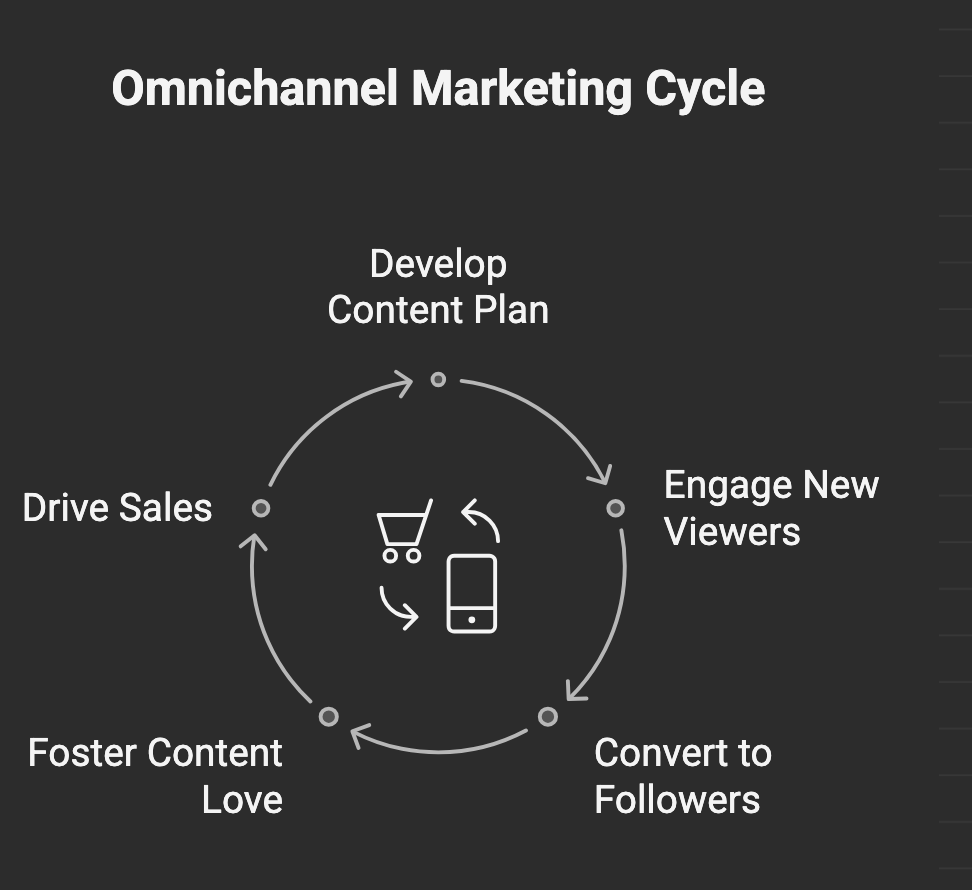
This is what consistently drives your content in front of new viewers, turns them into followers, makes them love your brand and ultimately leads them to buy your product or service.
It’s all about marketing psychology and good copy.
This is where using an omnichannel customer engagement solution becomes a game-changer. Instead of shouting into the void or throwing spaghetti at the wall, you use data-driven insights to speak to the right customer, at the right time, on the right platform, with copy that actually resonates.
 *Fun Fact: NobelBiz reports businesses with strong omnichannel strategies retain nearly 9 out of 10 customers compared to 3 out of 10 otherwise. Those stats are pretty impressive.
1. Identify and Understand Your Target Audience
Whether you’re writing for a client or for your own brand, you need to know who your audience is. That means doing a little research. A powerful omnichannel strategy starts with crystal-clear, data-driven audience understanding. Dive into creating rich customer personas that cover these essential dimensions:
What should you be looking for?
- Demographics – Age, gender, location, occupation, income, life stage.
- Psychographics – Interests, values, opinions, lifestyles.
- Behavioural Attributes – Browsing habits, content preferences, purchase triggers, pain points.
Where do you get this data from?
- Analytics Tools – Google Analytics, social media insights, email reports to track interactions.
- Surveys & Interviews – Directly ask customers about challenges and habits.
- Social Listening & CRM – Mine feedback and historical interaction data for deeper discovery.
Pro Tip:
Create a persona template detailing demographics, psychographics, behaviours, preferred channels, and pain points. This will become your copy bible, ensuring every message speaks directly to “who” and “why.”
Hire a copywriter today. Drop Copywriter Collective a line.
2. Map the Customer Journey
You can’t craft persuasive journeys without understanding your customer’s path.
What to Map:
- Stages – Awareness, Consideration, Decision, Retention, Advocacy.
- Touchpoints – Social, search, website visits, email opens, in-app sessions, offline visits.
- Emotional State & Action Goals – What they feel and what you want them to do at each point.
How to Map It:
- Use journey mapping tools like UXPressia, Smaply, or Trello for visualisation.
- Map triggers and expected actions. For example, email opens lead to link clicks → results filter.
Write narrative lines that reflect emotional tone and copy objectives at each touchpoint.
Copy Tip:
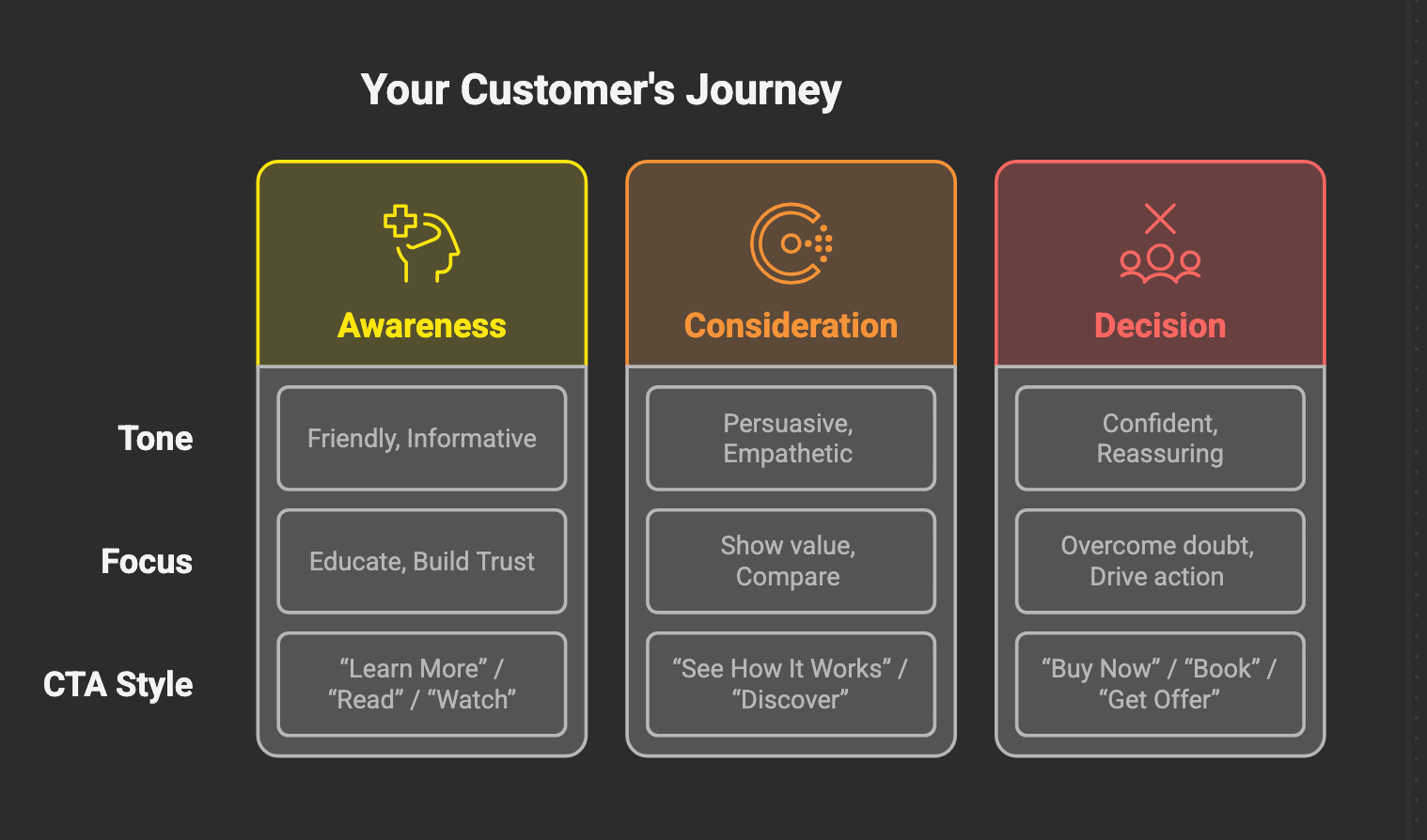
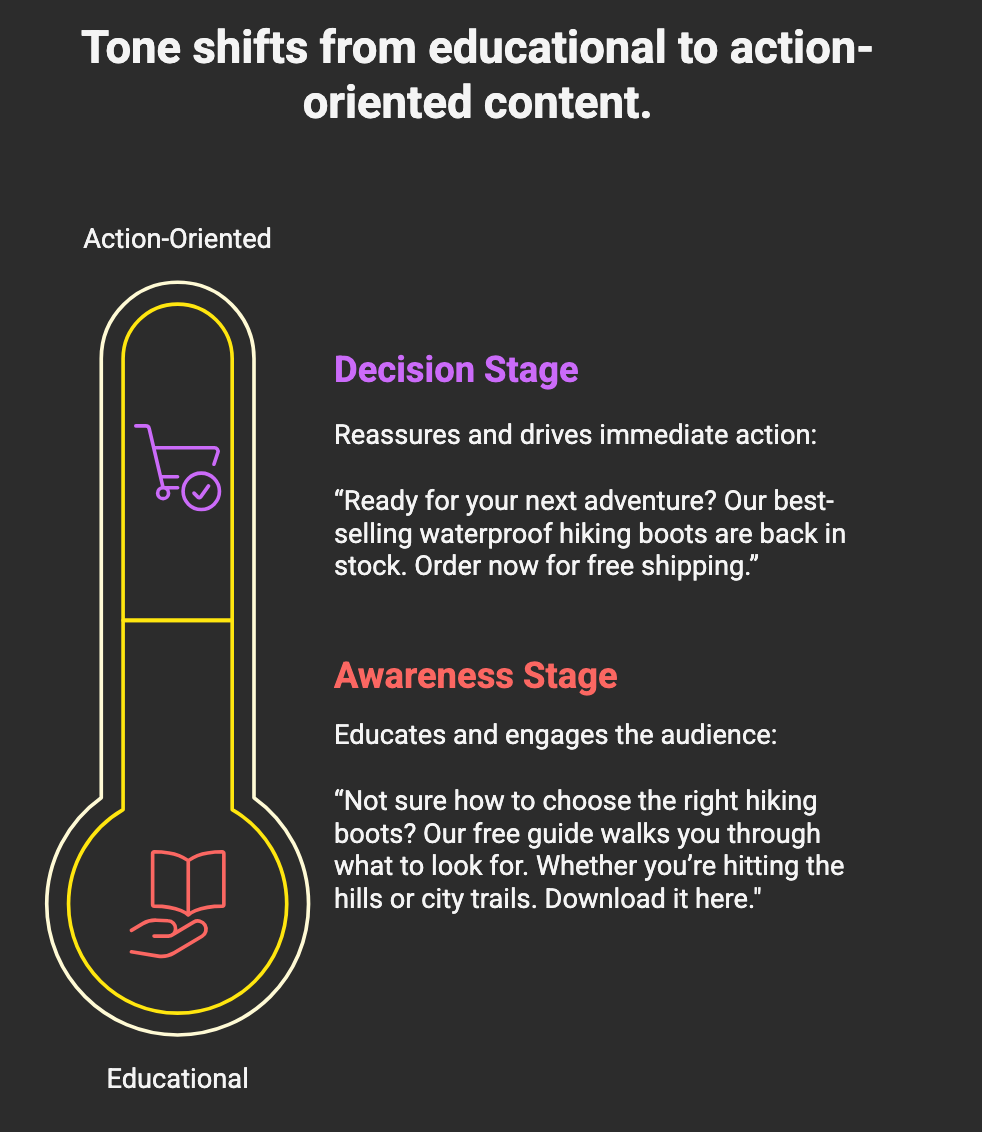 At Awareness, your tone should be educational and engaging. While at Decision, it’s reassuring and action-oriented:
The Biggest Mistake Copywriters Make:
Using Decision-stage language too early. Pushing for a sale when the customer is only just figuring out they have a problem. That leads to tune-outs, unsubscribes, and poor engagement.
 Pro Move:
Mirror where the customer actually is in their journey, not where you want them to be.
3. Segment with Specific Goals
As a copywriter, your job is to persuade, engage, and convert. However, that becomes nearly impossible if you’re writing vague, catch-all messages hoping something sticks. This is known as the “spray-and-pray” approach: blasting the same generic message to your entire list or audience regardless of who they are, what they care about, or where they are in their buying journey.
We want to avoid this approach. To do this, we need to practice effective segmentation in copy. You do this by slicing your audience into meaningful groups based on shared characteristics, behaviors, or needs, so you can tailor the tone, offer, hook, and call-to-action accordingly.
What to Segment:
- By Demographics – Age, location, occupation.
- By Behaviour – Cart abandoners, repeat buyers, inactive subscribers.
- By Lifecycle Stage – Cold leads, nurturing prospects, loyal customers.
How to Do It:
- Use unified analytics and CRM to define for example, “Browsed product X in last 7 days.”
- Assign SMART goals per segment: e.g., boost cart recovery conversions by 15% in 30 days.
- Precision Writing Looks Like This:
- For New Subscribers: → Warm, friendly onboarding copy. “Hey! Welcome to the club. Here’s what we’re about…”
- For Abandoned Cart Users: → Urgent, benefit-driven reminders. “Forget something? Your [product] is still waiting—for 24 hours only.”
- For Loyal Repeat Buyers: → Gratitude-led messaging. “We appreciate you. Here’s early access to our next drop.”
- For Inactive Users: → Re-engagement hooks. “Hey, it’s been a while. Here’s 20% off to remind you why you loved us.”
Copy Focus:
Write angle-based messaging: new subscribers get brand story; lapsed buyers get re-engage offers.
4. Choose the Right Channels
Picking the right channels boosts ROI—stop trying to shout everywhere.
Channel Roles:
- Social: discovery and brand-building
- Email: nurturing and longer-form storytelling
- SMS/Push: timely reminders or conversion nudges
- Web/App: transactional and product detail hub
How to Decide:
- Audit where personas are most active—use analytics and surveys.
- Start small: dominate 2–3, then expand as you refine message mastery.
- Document which channel takes which job (e.g., abandoned cart reminder = SMS/Push).
Copy Focus:
Write each message to match the channel style. Embrace context and brevity where needed.
5. Create Cohesive Messaging with Voice Variation
Channel differences don’t mean brand disconnect.
Messaging Matrix:
How to Do It:
- Build a matrix in your editorial calendar specifying tone per channel.
- Adapt one core idea into multiple styles—long form email → short push → social teaser.
- Keep brand essence constant: same key promises, personality, language style.
Copy Focus:
Use channel-specific language but reinforce consistent brand voice and value.
6. Personalise Every Touchpoint
Personalisation turns clicks into conversions and loyalty.
What to Personalise:
- Names, geography, past behavior (“Still looking at hiking boots?”).
- Product recommendations based on browsing history.
- Dynamic blocks that change per segment.
How to Do It:
- Use your analytics platform to define triggers & dynamic content tags.
- Draft fill-in-the-blanks templates: “Hi [Name], because you liked [X]…”
- Let AI help with recommendations, but pen every key phrase yourself.
Copy Focus:
Make messages feel one-to-one, not mass blasts. Your reader should feel seen.
7. Build Multi-stage Journeys
Journeys, not single blasts, win the conversion game.
Journey Structure:
- Trigger: e.g., cart abandonment
- Step 1: Reminder email (24hrs)
- Step 2: Follow-up SMS (+ offer)
- Step 3: Retargeting ad
- Branch: If purchased → thank-you note; if not → final discount email
How to Do It:
- Map each journey stage with its trigger and copy goal.
- Write each touchpoint to “feel” sequential—acknowledge past steps.
- Keep branches logical and emotionally aligned.
Copy Focus:
Use progressive storytelling: interest → reminder → incentive → decision.
8. A/B Test & Refine
Copywriter? Data’s your best editor.
What to Test:
- Headlines, subject lines, CTA colors, messaging sequence.
- Format variations: long-form vs punchy.
- Timing and delivery cadence.
How to Do It:
- Run simultaneous A/B tests and monitor performance.
- Use analytics to determine winners—lift, open rates, conversions.
- Roll out winning variants; archive or revise underperformers.
Copy Focus:
Approach writing as experimentation—test every assumption.
9. Automate Thoughtfully (Stay Human)
Automation scales—but your copy must still feel alive.
What to Automate:
- Journey triggers and delivery.
- Segmentation updates.
- Dynamic content insertion.
How to Do It:
- Use platform automation for delivery, but write updates and tone live.
- Avoid templated “Dear Customer”—personalize each piece.
- Keep your writer’s voice: anecdote, honesty, occasional humour.
10. Monitor Metrics Across Channels
What gets tracked gets improved.
Metrics to Watch:
- Engagement: clicks, opens, replies.
- Conversion: purchases, signups, downloads.
- Retention: repeat visits and purchases.
How to Do It:
- Use unified dashboards across channels to track attributions.
- Map metric dips to copy changes—what messaging sequences work?
- Share results with your team—good copy is cross-functional.
11. Iterate Relentlessly
Omnichannel works best with evolution, not set-and-forget.
What to Iterate:
- Copy updates: new hooks, seasonal angles, tested formats.
- Journey structures: adding/removing steps or branches.
- New channels as personas shift.
How to Do It:
- Schedule weekly/monthly reviews of all journeys.
- Run micro-tests before wide-scale changes.
- Stay curious about new audience habits and tech trends.
Copy Focus:
Treat your work as a living document—tweak, tune, update.

