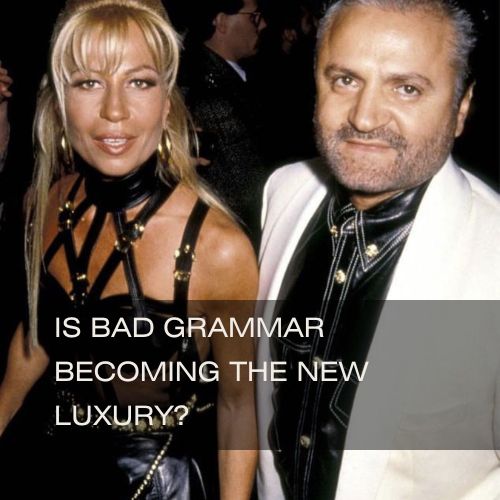
The Age of Errors in Copywriting: Is Bad Grammar Becoming the New Luxury?
At Copywriter Collective, we spend a lot of time circling one uncomfortable truth: technically “good” copy is getting easier, and genuinely human writing is getting rarer. One minute it’s AI-polished brand copy, the next it’s a slightly off Instagram caption that somehow says more than a perfectly written paragraph ever could. A lot of our writing lives in that in-between space, where tone, authorship and intent matter more than technical perfection. This piece fits into that wider conversation on how writing is changing post-AI, and why sounding human is fast becoming the hardest skill in copywriting.
My post-dinner doom-scroll came to a screeching halt when my thumb landed on a Versace World instagram post: A collection of grainy photos celebrating the late Gianni Versace, seen through the eyes of his sister and the house’s matriarch, Donatella Versace.
Table of Contents
The Golden Siblings of the 90’s Fashion Pantheon.
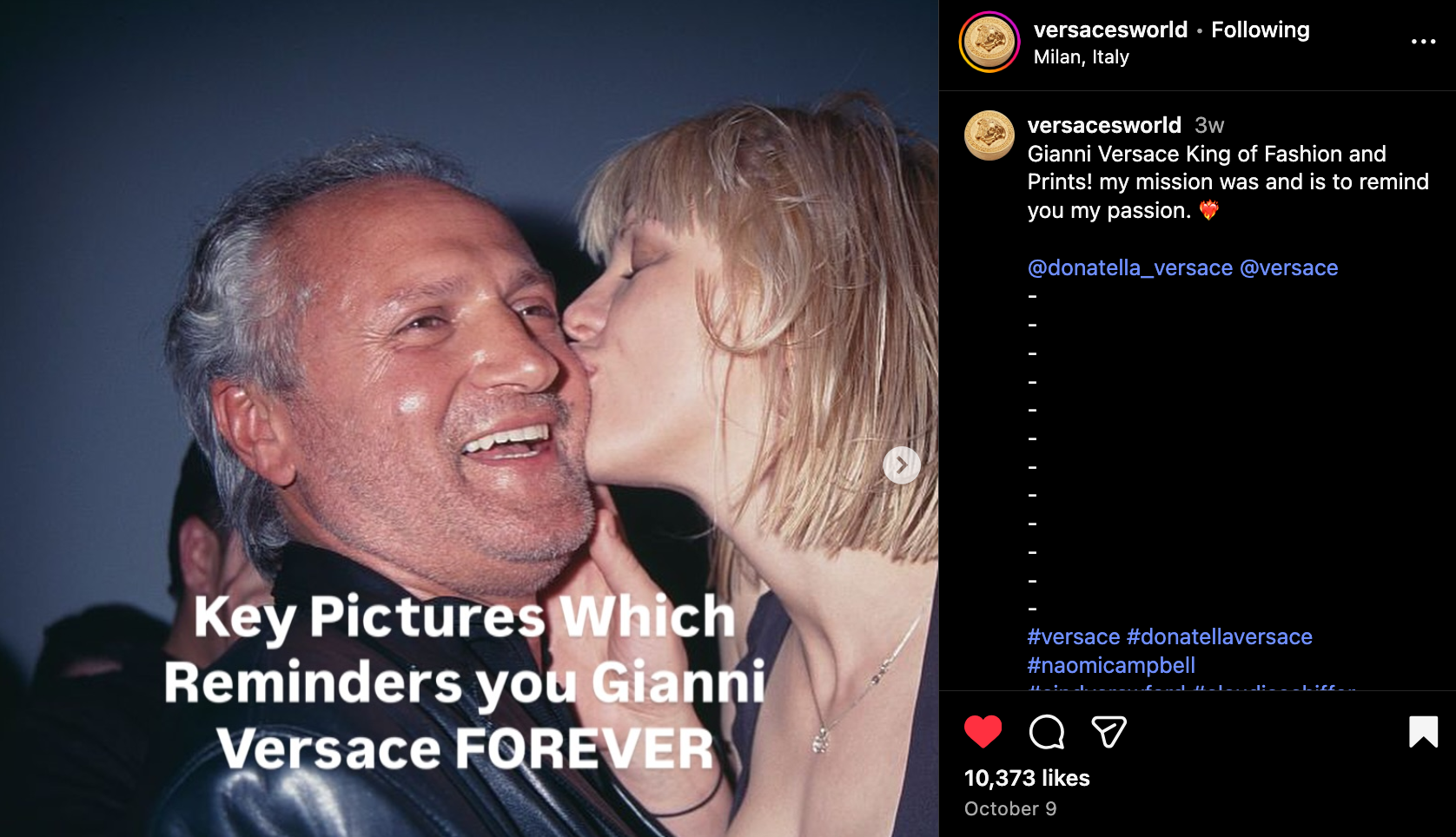
The nostalgia-drenched caption read: “Gianni Versace King of Fashion and Prints! my mission was and is to remind you my passion.”
As a copywriter, my initial thought was: “This was clearly written by an unpaid intern with good connections and a ChatGPT Plus plan.” As I continued to swipe through the post, reading each caption that accompanied the collection of old photos, I could hear Donatella Versace’s unmistakable and incredibly captivating voice read each word to me. Anyone who’s watched enough interviews and clips of Donatella knows exactly what I’m talking about: her accented, broken English with that slow, raspy delivery. Prioratising passion and emotion over linguistic precision.
Versace has taken tone of voice to another level.
It’s somewhere between genius and typo. And it works, because it’s not trying to. And it’s branding, because we hear Donatella’s voice as we read each sentence. As a result, it’s no longer clunky and awkward to read. It’s just Donatella.
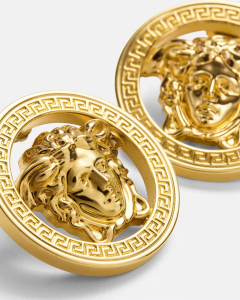 That’s When the Medusa Medallion Dropped.
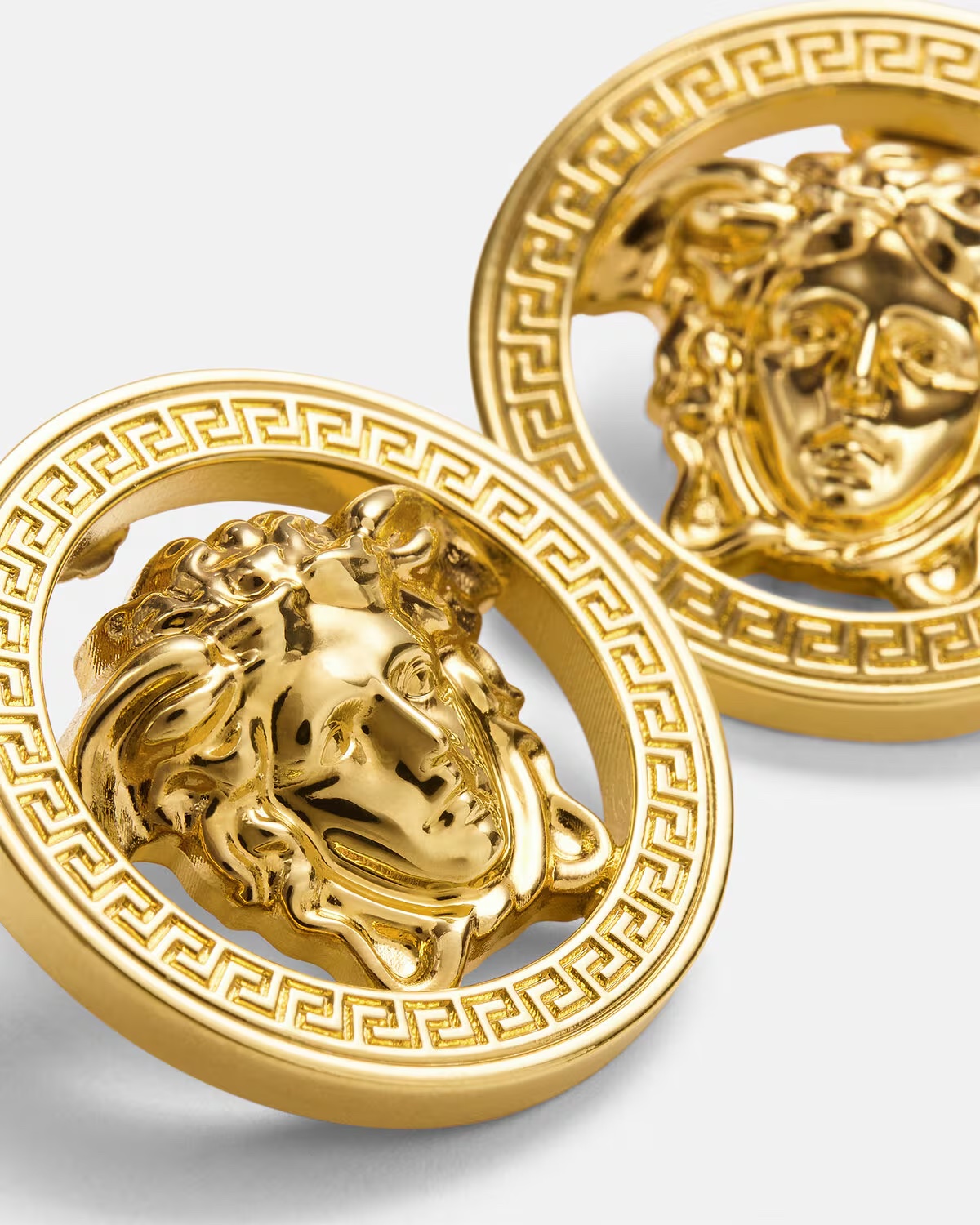
If this account really was written by an unpaid intern with good connections, then it would, in fact, have been written by ChatGPT.
Which brings us to the strange, slightly terrifying reality of the post-AI creative world: good copy doesn’t necessarily mean good writing.
Flawless grammar and punctuation, perfectly structured sentences and formulaic brand tone is so easy to replicate now-a-days. Just have Chat edit out our mistakes.
Back in the day, before AI, writers would have editors to clean up any errors and smooth out the page. So, by the time a piece was published, every grammatical misstep had been erased.
It’s a similar process today, but with Chat doing all the editing, and everyone knows it.
Which could be why we see a rise in bad writing. Copywriters are leaving in the raw edges and bad grammar, not out of oversight but proof of authenticity.
If I look back on the paragraphs formed from train-of-thought and bouts of inspiration for upcoming articles on my phone (even this one) they’re riddled with typos, spelling mistakes and grammatical offenses. You’d have to pries my phone from my cold, dead hands before seeing my Notes app. Not out of secrecy, but mercy. No one should ever see those early stages of my writing.
The Aesthetics of Error in Copywriting.
In an AI-dominated landscape, the occasional error becomes a flex. Evidence that there was a process involved in creating an article, which began with a moment of inspiration, a few paragraphs scribbled down on your commute to work and hours of adding and subtracting sentences. You’re not just pressing Enter and waiting for a bot to do the work.
A slightly misspelled word or clumsy phrase is a texture in copy that tells the reader, this is real, this was written by a sentient being.
We’ve hit an interesting cultural pivot where perfection feels fake and flaws feel authentic.
 Gary-copywritercollective