Want to Know What Tools the Professional Copywriters Use?
Quick answer; it’s not just ChatGPT.
Copywriting doesn’t improve through talent alone. Just ask any one of the professional copywriters at Copywriter Collective. Like any other vocation, you can’t just rely fully on natural ability. You’ve got to continually work on sharpening your writing skills and learning new tricks of the trade, to stay on top of your game. We’re going to let you in on a little secret; the tools a writer uses influence how they structure ideas, refine language, and develop their writing style over time.
That’s why we’ve compiled a list of some of our favourite writing tools and websites that make our job that bit easier.
Table of Contents
Tools That Improve Clarity and Structure
Every copywriter has their own unique writing process. Some write clearly and concisely onto the GDoc in one fell swoop. Others might choose to lexical effluvium all over the page and worry about the clean-up at a later date.
Whatever the preferred practice, a copywriter is going to have to make a few edits before forwarding on their final draft.
Editing platforms help copywriters identify issues early, particularly when developing writing skills. Tools like Hemingway Editor and Readable highlight weak sentence construction, passive phrasing, and unnecessary complexity.
Tools That Strengthen Word Choice and Precision
When you hear of weak copy, it’s not because the copy is incorrect per se. More often than not, it’s because it’s imprecise.
Do you ever have that problem where you know the meaning but you can’t remember the word? OneLook Reverse Thesaurus is going to become your favourite work colleague.
Another favourite is WordHippo. This tool has everything you’ll need to sharpen your language without drifting into fluff, or drowning in the pool of purple prose. It’s the one-stop-website for everything from synonyms and antonym suggestions to definitions, rhymes and phrasal suggestions.
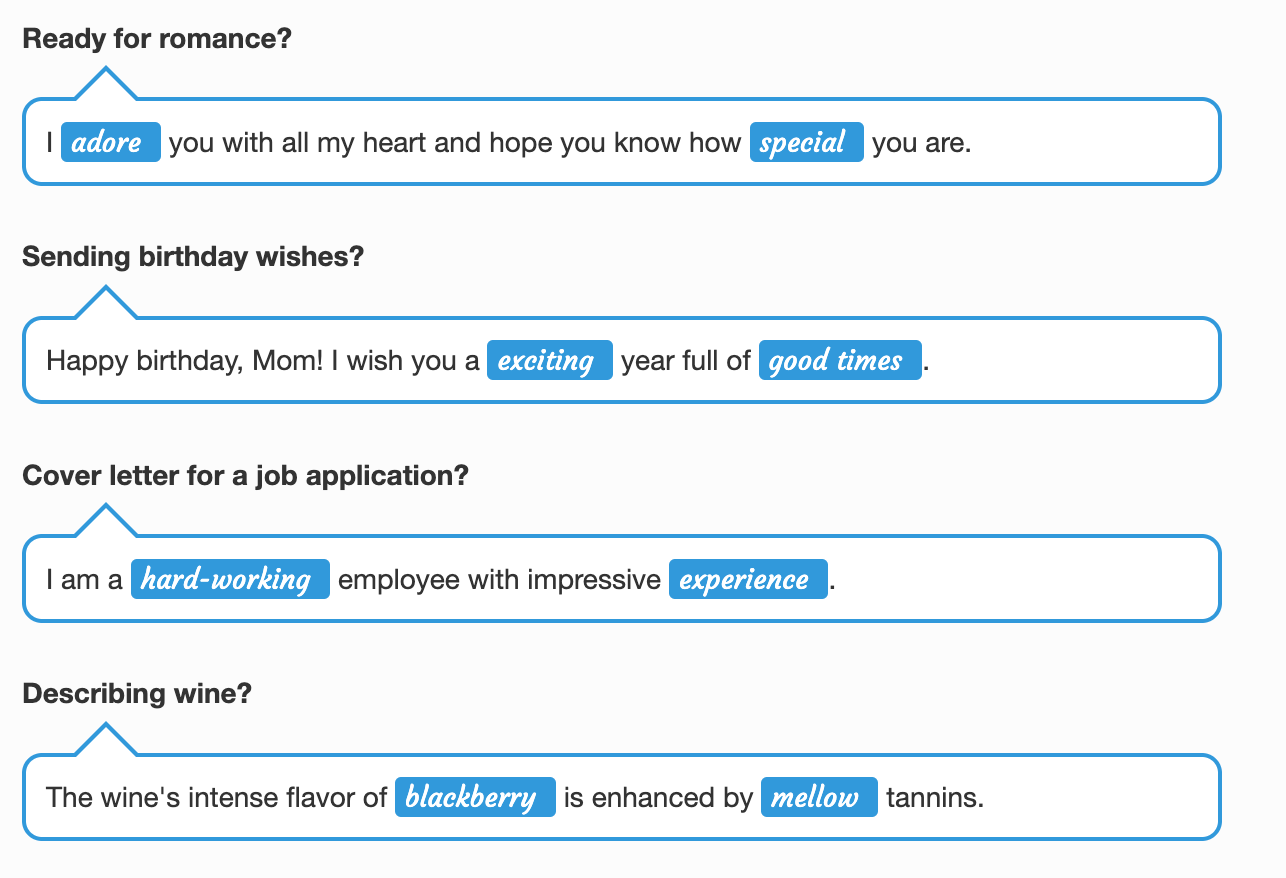 A bonus one for you: words-to-use is a solid alternative thesaurus for those days when words simply refuse to word. It suggests sharper vocabulary to replace overused or lifeless phrasing.
Unlike traditional thesauruses, these platforms allow writers to search by definition, tone, or phrase structure.
Precision at this level directly supports stronger brand voice development, particularly when copy must sound human while remaining commercially effective.
Tools That Improve Headlines and Conversion Thinking
To the dismay of every creative copywriter, headlines are now largely governed by the SEO Regime. Witty puns and ironic wordplay rarely survive the cut.
Tools like the CoSchedule Headline Analyzer and Sharethrough Headline Analyzer help copywriters test clarity, structure and emotional pull before publishing their blog posts. They break down word balance, length, and engagement signals, making your headlines SEO-friendly without killing off all your darlings. This kind of testing strengthens conversion-focused writing and supports professional copywriting services, where headlines must earn attention quickly and justify every word.
A well-balanced headline strengthens conversion-focused writing and improves performance across landing pages, email subject lines, and campaign messaging.
Learning Tools Via Reading and Editorial Study
Writing improves fastest when writers spend time reading well-edited work. Resources like Nieman Storyboard and Copywriter Collective’s ‘How to be a Copywriter’ allow copywriters to study how strong writing is constructed, from long-form journalism to practical editorial breakdowns.
Examining how ideas are structured, information is layered, and language is edited with restraint helps build judgement rather than surface technique.
Using Tools to Build a Sustainable Writing Career
No tool replaces thinking. But the right ones accelerate growth.
To use tools effectively:
- Strengthen transferable writing skills
- Apply feedback through consistent writer work
- Build confidence through repetition and review
- Combine tools with personal experience in copywriting.
Writers who invest in process rather than shortcuts develop stronger instincts and more sustainable careers.
Those seeking structured growth often benefit from copywriting programs or professional copywriter training, particularly when paired with real client projects.

