The Rise of AI Slop and Why Human Creativity Is Winning
Congratulations, You’re Irreplaceable!
Here’s some good news for all you creative copywriters out there who thought your career was over. Remember the big companies that had a mass clearout of their creative workforce because they thought AI could do the job better (and more importantly, at a lower cost)? Well, all that money saved is now money lost. Because they’ve realised that any “creative” content their machines pushed out to their customers was all, in fact, just a load of slop.
You may have heard the term “AI slop” crop up over the past year. Basically, AI slop is trash for the mind and soul. It’s low-quality, mass-produced content that has been AI-generated, designed to push out material at rapid speed with zero real substance or creative thought behind it.
The thing with AI is that it depends on human creativity to keep improving. But as AI-generated content floods the internet, there’s less genuine human thought for future models to learn from. The machine starts training on its own output. Less human input means lower quality output, which gets fed back in, which produces even lower quality output. A boring feedback loop that nobody asked for.
AI Built the Problem. Human Creatives Are the Solution.
As Chelsea Tobin wrote in Forbes: “Talented human writers and content marketers are in demand. Even by the AI companies that built the GenAI tools that threatened to replace them.” She’s right. Anthropic, the company behind Claude, was reportedly offering up to $400,000 for a Head of Product Communications. The AI tool wants a human to lead the narrative of an AI company. That’s because you can’t automate a point of view.
Consumers have clocked this too. Human content has quietly become a flex. And some of the biggest B2C brands have picked up on it, leaning hard into the anti-AI sentiment bubbling within their audiences.
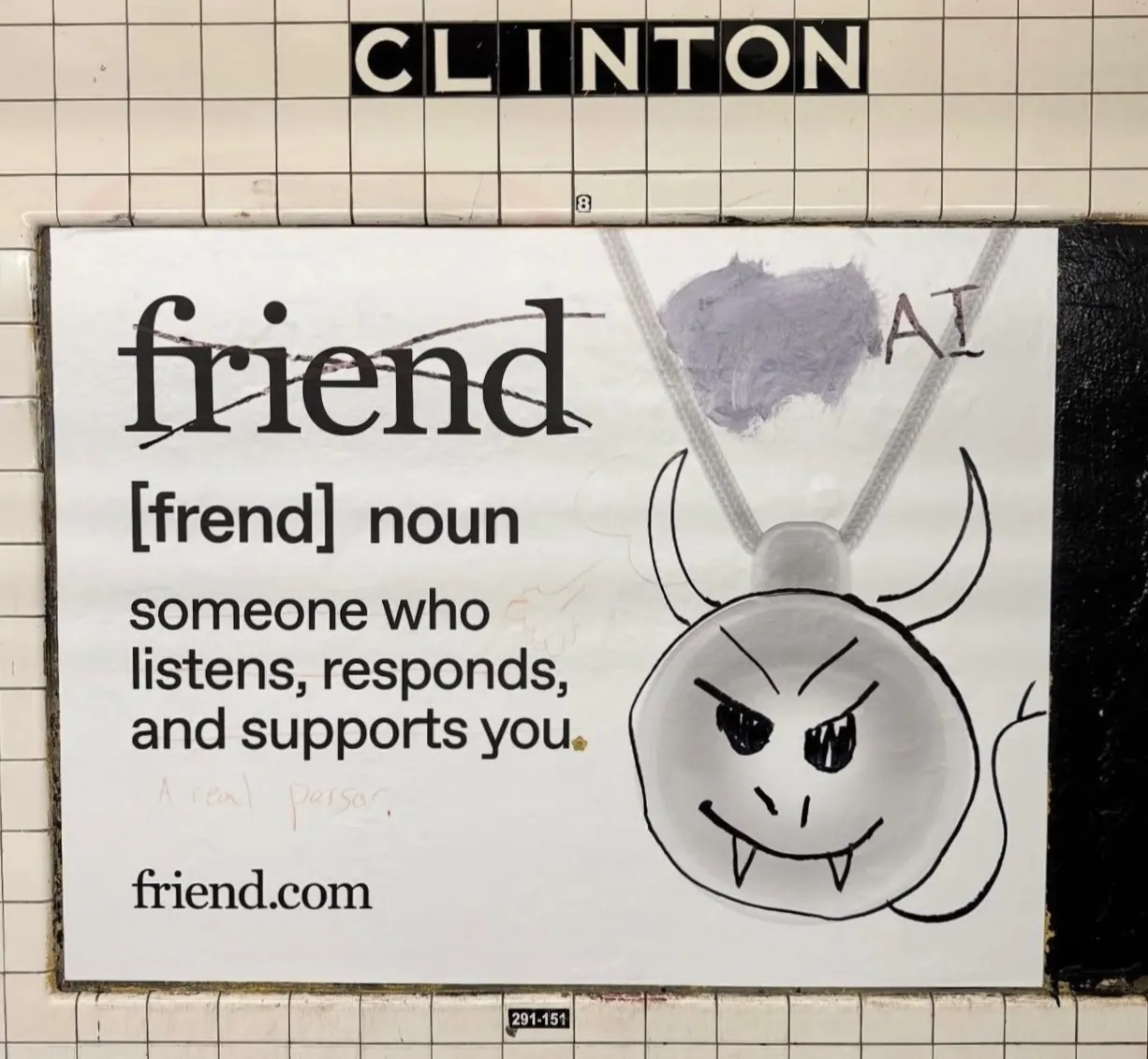
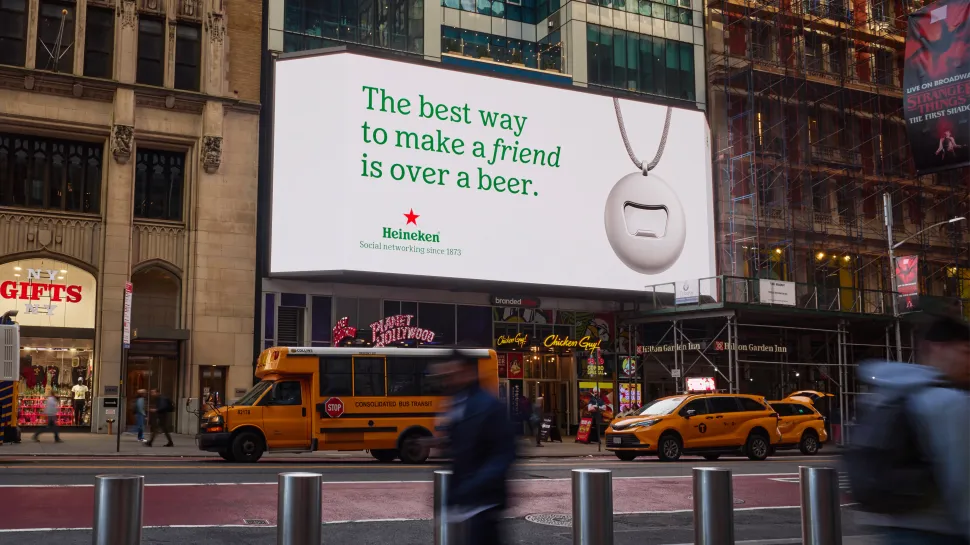
Take Heineken. They put up a billboard that simply read: “The best way to make a friend is over a beer.” It was a cheeky, well-timed clap-back. A startup called Friend had just launched a New York subway campaign promoting an AI wearable necklace, a $129 pendant that listens, responds, and keeps you company like a “friend” would. Naturally, New Yorkers hated it and demonstrated their feelings by vandalising the ads. Heineken watched, waited, and responded with a bottle opener necklace that looked almost identical to Friend’s pendant. Simple, sharp, and straight to the point.
Polaroid went even further, leaning into phone fatigue and anti-AI sentiment with outdoor ads that read: “AI can’t generate sand between your toes” and “Real Stories, not Stories and Reels.”
The fact that both campaigns live outdoors isn’t lost on anyone either. This is deliberate. People are stepping away from their screens, and the brands paying attention are meeting them there. 82% of Gen Z adults are aware of their unhealthy relationship with social media, and that awareness is translating into a genuine hunger for real, human content.
Then there’s Substack. A platform built entirely on human voices and writing with zero algorithmic interference. Its valuation went from $650 million in 2021 to $1.1 billion in 2025, and it’s not hard to see why. When the big publishers and agencies gutted their creative teams, the writers set themselves up on Substack and took their audiences with them.
Meanwhile, companies like Coca-Cola continue to use AI in its creative and understandably get dragged for it, most recently for an AI-generated Christmas ad that landed about as well as you’d expect. So, if the Coca-Cola Head of Marketing is reading this, hire yourself a professional creative copywriter!
People want human connection and they want real-life experience. To deliver that, brands need human creatives on their payroll. The companies that went all-in on AI learned that lesson the hard way. The smart ones are already hiring the writers back.
Heather is a Barcelona-based copywriter and photographer. Contact Copywriter Collective today and hire Heather for her next project.

